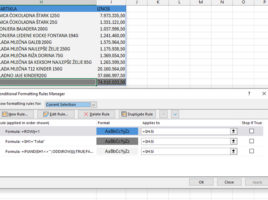
Formatting dynamic results

Since 2018, Excel has undergone one of the biggest transformations in its history with the introduction of functions for working with dynamic arrays. Unlike traditional functions that return a single value, these functions can generate entire tables as a result. Because these tables are dynamic, any change to the data in the source is automatically reflected in the displayed result. How to format dynamic results?

Multiple search results

It is common knowledge that the VLOOKUP function cannot return results that are “to the left” of a given range, and this problem is solved by XLOOKUP, which additionally allows you to search the range from the beginning or from the end. However, what if these functions need to return more results? To do this, you used to need to use array formulas, but today this is performed in a much easier way…

SVG maps

The introduction of the SVG format in Excel has gone unnoticed by most users, and it enables the conversion of maps into standard graphics objects. After that, you can do whatever you want with them. In this simple “recipe”, I’ll show you how to convert and format SVG maps you have previously downloaded, in order to create effective reports…

Checkbox

Checkbox is not a new Excel feature. We were able to add checkboxes to Excel reports earlier, by choosing some of the controls offered in the Developer ribbon (Form Controls, ActiveX Controls). Recently, Microsoft has made this option much more accessible, and in the following post you will find out how to add a checkbox to your report and how you can analyze such reports.

Tiny charts

When you want to display data that contains multiple separated series in a chart, it can often look clumsy. It is possible to tolerate presentation of three or four series, but anything more than that is a nightmare for those who watch the reports and need to draw a certain conclusion. The solution is to display several smaller, separate charts instead of one. This type of data presentation is called small multiples, and here’s how to achieve it in Excel reports.