A slightly different cell address

The address of a cell in Excel is formed by combining the column label and the row number. For example, the address A1 indicates that it is a cell that is in the first row of column A. However, we can also assign an address in another way- by using the row number label and the column number. Thus, cell A1, in this alternative notation, would have the address R1C1. How to change the way the address is assigned and can it be of practical use?

Multiple search results

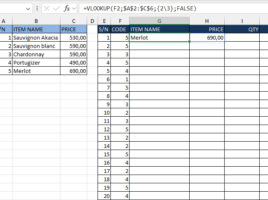
It is common knowledge that the VLOOKUP function cannot return results that are “to the left” of a given range, and this problem is solved by XLOOKUP, which additionally allows you to search the range from the beginning or from the end. However, what if these functions need to return more results? To do this, you used to need to use array formulas, but today this is performed in a much easier way…

Marking the best-selling item

When we create a column chart to visualize data, the columns are often of different heights. We evaluate where the best sales were achieved visually or add data labels and then make the conclusion based on the appropriate numbers. Excel does not yet have conditional formatting for charts, but there’s a trick you can use to automatically determine the highest value in a series.

Autosave and versioning

Automatic saving of Excel documents has been around for a very long time. If you go to Excel Options, in the Save section, you will see the option to Save Autorecover Information Every… and the number of minutes after which the saving is performed. However, this works if your computer resets or for some other reason stops working. With the advent of the OneDrive repository and storing documents on it, we got a new, better Autosave…

Two dashes

Although Excel recognizes only two types of data: numbers and text, sometimes you’ll be working with Boolean values, such as TRUE and FALSE expressions. There is a simple trick to convert these values into ones and zeros respectively, so that you can add them more easily, and you will find out how to do this in a short “recipe” that follows.