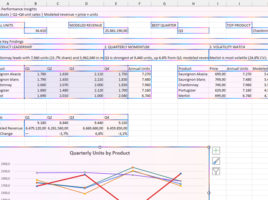
Formatting dynamic results

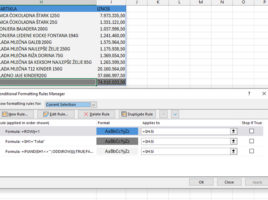
Since 2018, Excel has undergone one of the biggest transformations in its history with the introduction of functions for working with dynamic arrays. Unlike traditional functions that return a single value, these functions can generate entire tables as a result. Because these tables are dynamic, any change to the data in the source is automatically reflected in the displayed result. How to format dynamic results?

Copilot floating menu

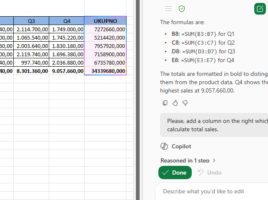
Recently, in the lower right corner of every Excel or other Office document, you can notice a new floating icon that allows direct access to the Copilot application. When you hover the cursor over it, a context menu with several useful options automatically opens, while clicking on the icon or pressing the F6 key, on the right side of  the Excel window, opens a panel that allows direct correspondence with Microsoft Copilot.

The first few rows

How to take the first few rows from a table? How do we make this a parameter that we can change? This feature can be useful when we simply want to retrieve the first few rows from a table, or when it contains e.g. some sales data, we can sort them in descending order by the column that contains the sales value, and then we extract  the Top 5 items.

What language do you speak?

The TRANSLATE function became part of Excel in July 2024, and recently we have another useful function that you can use to detect the language in which a text is written. It’s a new DETECTLANGUAGE function, and you can use it in conjunction with the TRANSLATE function.

Two dashes

Although Excel recognizes only two types of data: numbers and text, sometimes you’ll be working with Boolean values, such as TRUE and FALSE expressions. There is a simple trick to convert these values into ones and zeros respectively, so that you can add them more easily, and you will find out how to do this in a short “recipe” that follows.